Michael Schumacher and Rubens Barrichello. Sebastian Vettel and Mark Webber. Lewis Hamilton and Valtteri Bottas. Max Verstappen and Sergio Pérez. These driver pairings will be remembered for decades as some of the most successful in the sport, all because they led their teams through eras of dominance. But what do they all have in common? They had a clear number one and number two driver. One driver is the leading man, the other is his slightly less glamorous sidekick. Batman and Robin. Sherlock and Watson. Tom and… Jerry, if Jerry was contractually obligated to let Tom win. The number one driver’s job is to win the championship. He is the priority. The number two’s job is to defend, score points, and play backup if the lead driver is out of contention. But what happens when there is no number two driver?
With the Red Bull-Verstappen era showing cracks, McLaren has risen from “best of the rest” to genuine title challengers. Last season, they clinched the Constructors’ Championship, and now they have what many consider a dream team: Zak Brown as CEO, Andrea Stella as Team Principal, and Lando Norris and Oscar Piastri, two young, ambitious, and ridiculously talented drivers. On paper, this sounds like the perfect foundation for success. But is it? Or is McLaren sitting on a time bomb waiting to explode?
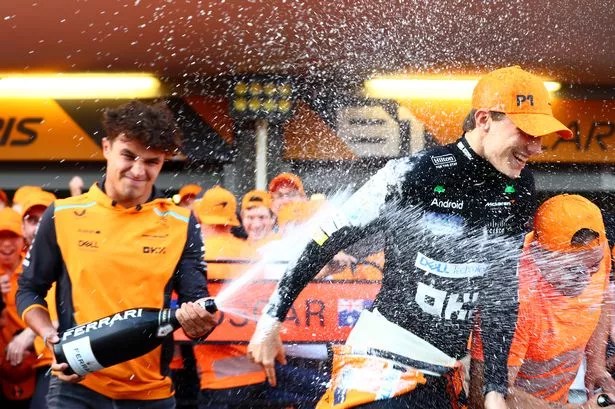
Lando Norris joined McLaren in 2019 as a 19-year-old rookie. It didn’t take long for him to outperform his more experienced teammate, Carlos Sainz, finishing in the points 11 times and establishing himself as one of F1’s most exciting talents. His pace, consistency, and and meme-worthy radio messages made him a fan favourite. Oscar Piastri, on the other hand, set the paddock on fire before even stepping into an F1 car. His public contract dispute with Alpine dominated headlines in 2022, as he rejected their seat to join McLaren instead. With so much scrutiny on him, the pressure was immense, but he delivered, winning Rookie of the Year in 2023. Two outstanding drivers. Two potential world champions. Zero clear hierarchy.

This isn’t a problem when a team isn’t fighting for championships. But in mid-2024, as McLaren became Red Bull’s biggest threat, things changed. Piastri started matching Norris’ pace, challenging his long-held team leader status**.** Suddenly, McLaren wasn’t just competing with Red Bull, they were fighting each other.
McLaren’s philosophy of having “two number one drivers” is unique. Both get equal opportunities. Both fight for the championship. In theory, this eliminates resentment and breeds healthy competition. In practice? Well, communism was great in theory too. The first crack in the perfect system appeared at the 2024 Hungarian Grand Prix: Piastri led most of the race after overtaking Norris at the start. McLaren pitted Norris first, giving him the track position advantage. Team orders were issued: Norris should let Piastri back through. Norris refused.
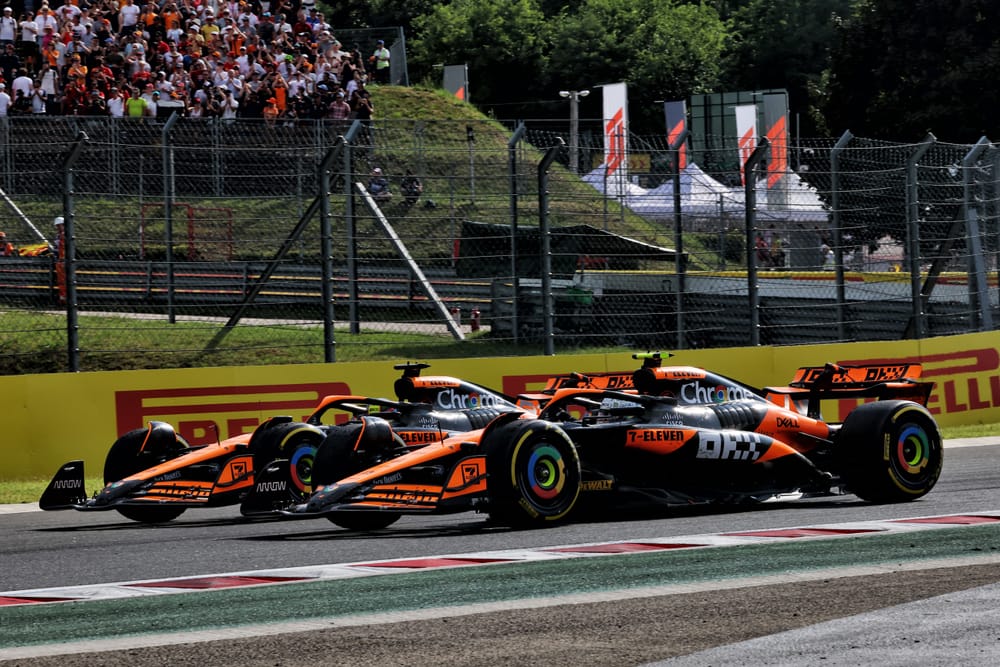
A tense radio exchange followed. Five laps from the finish, Norris finally complied, handing Piastri his maiden F1 victory.
For McLaren fans, the moment was bittersweet. Their team had won, but at what cost? The first real sign of a power struggle had arrived, and history doesn’t repeat itself, but in F1, it rhymes, and McLaren is starting to hum the same tune.
McLaren’s current dilemma is eerily similar to Mercedes 2013-2016, when childhood friends Nico Rosberg and Lewis Hamilton turned into bitter rivals fighting for supremacy. At first, Mercedes let them race freely, just like McLaren is doing now. What happened? Chaos. Team orders were ignored, on-track collisions cost points (Spa 2014, Austria 2016), the rivalry turned toxic, to the point where Rosberg retired the second he won the title in 2016
Sound familiar? Right now, Norris and Piastri get equal strategies, but as McLaren moves closer to title contention, will they stick to that? Or will Norris, like Hamilton before him, demand number one status?
It has become clear that McLaren have a fork in the road. Either let their drivers race freely and risk team harmony, team drama and an unstable dynamic which could cost them points and even championships; or, should they pick a clear number 1 driver, avoiding the politics, drama and potential mishaps but risk internal resentment between the drivers?
See you trackside!
Sources:
- forbes.com “How Oscar Piastri Won First F1 Race Amid McLaren’s Team Orders Fiasco.” July 22, 2024.
- motorsport.com “McLaren’s Equal Treatment Policy Under Scrutiny.” August 5, 2024.
- thetimes.com “Oscar Piastri: I’m no No.2, I’m here to become world champion.” March 28, 2025
 Trackside Talk